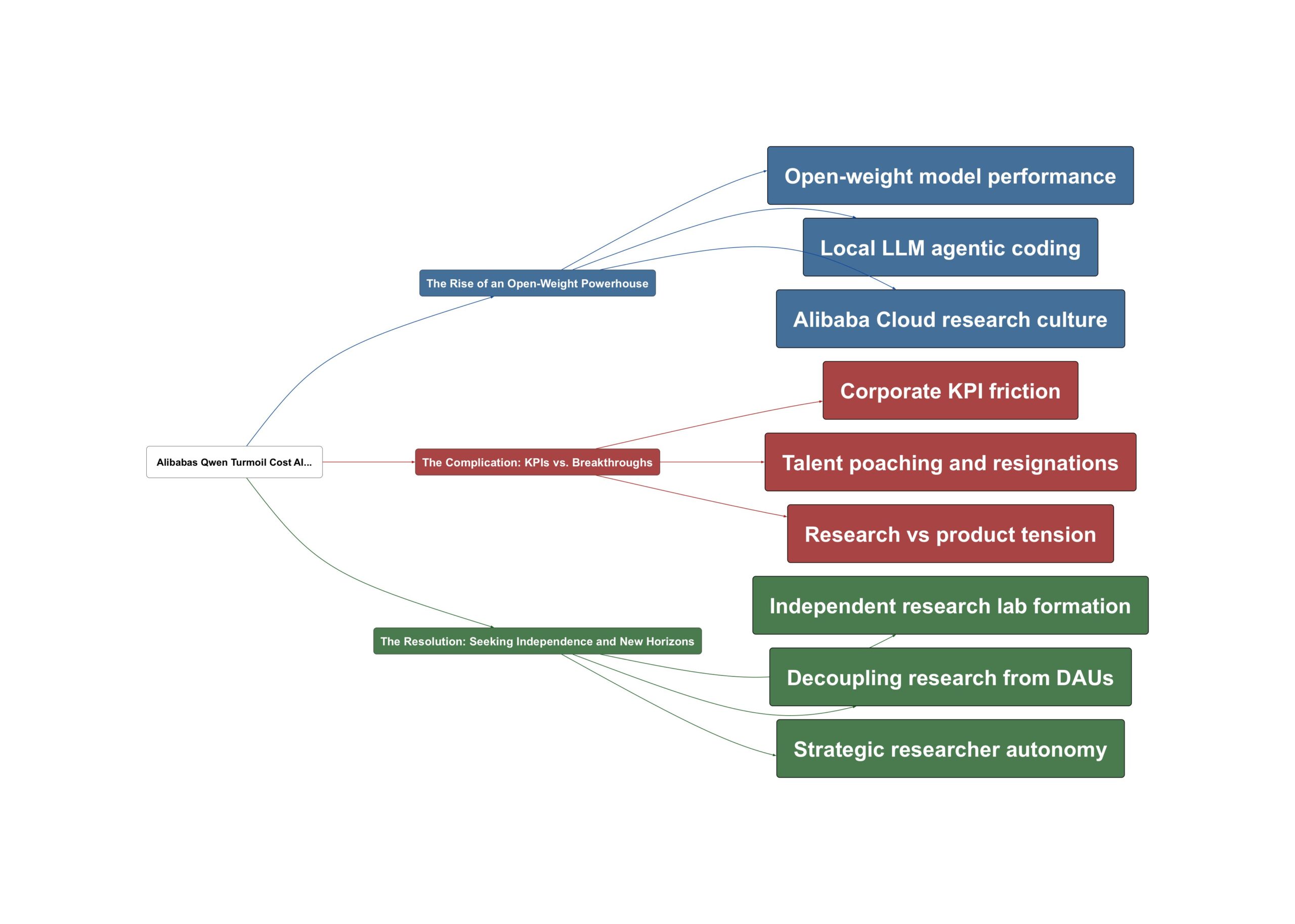
In the high-stakes world of large language models, the Qwen team at Alibaba has long been the dark horse, consistently delivering open-weight models that punch significantly above their weight class. But the winds are shifting. Recent reports of leadership departures and team resignations have sent ripples through the Hacker News community, sparking a debate about whether corporate meddling is about to kill one of the industry’s most promising research labs.
The Rise of an Open-Weight Powerhouse
The current situation finds Qwen at the peak of its technical prowess. The release of Qwen 3.5, particularly the 35B-A3B variant, has set a new benchmark for what is possible with local LLMs and agentic coding. Developers have found these models to be surprisingly robust, often rivaling proprietary giants in specific tasks. As one Hacker News user noted,
It’s the most capable agentic coding model I’ve tested at that size by far.
This sentiment is echoed by researchers who have successfully utilized Qwen for professional academic verification and mathematical summaries. The community’s fascination stems from the fact that these models run efficiently on consumer hardware, with some users reporting that Qwen 3.5 35B was
at par with Gemini 1.5 Pro
while running locally on an Ada NextGen 24GB card. But does this technical excellence matter if the organization behind it is falling apart?
The Complication: KPIs vs. Breakthroughs
The friction point seems to be the classic clash between pure research and commercial viability. Reports suggest Alibaba has begun imposing Daily Active User (DAU) metrics as a primary KPI for the Qwen team, a move that rarely aligns with the timeline of fundamental AI breakthroughs. The internal tension reportedly led to the resignation of the lead researcher after a perceived demotion intended to make room for external talent from Google’s Gemini team. One commenter summarized the frustration:
Alibaba tried to impose DAU as a KPI… It sounds like the lead was demoted to attract new talent, quit as a result, and the rest of the team also resigned.
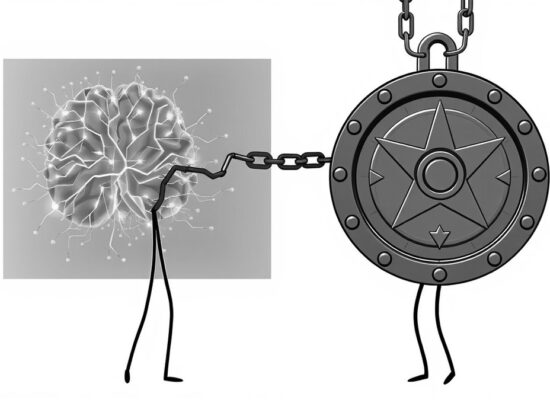
This transition to a more traditional corporate structure—often referred to as ‘mushroom management’—threatens the very culture that allowed Qwen to innovate. There is a growing skepticism on whether a leader from the Gemini team, which has faced its own share of criticism, can maintain Qwen’s unique edge. Is this simply ‘big corp politics’ at play, or a deliberate attempt to pivot Qwen into a sanitized enterprise product at the expense of its research soul?
The Resolution: Seeking Independence and New Horizons
For the researchers involved, the resolution likely lies beyond Alibaba’s walls. The tech industry has a history of talented teams spinning off to form independent labs when corporate interests become too restrictive. Many in the community are hoping for a ‘Mistral-style’ move where the core team raises independent capital to continue their work. As one user optimistically put it,
I hope that endogenous tech leads get to control their own career and tech destiny.
For the broader community, the resolution is found in the models already released; they remain a ‘legendary’ contribution to the open-weights ecosystem that cannot be retracted. Moving forward, the industry must recognize that elite AI talent requires a degree of autonomy that traditional corporate hierarchies are ill-equipped to provide. Whether these researchers land at US labs or start their own venture, the consensus is clear: the talent matters more than the infrastructure. The Qwen legacy proves that great models are built by cohesive teams, not by corporate committees chasing DAU targets.
💡 Key Takeaway: Elite AI talent requires research autonomy; corporate KPIs often destroy the teams that build them.