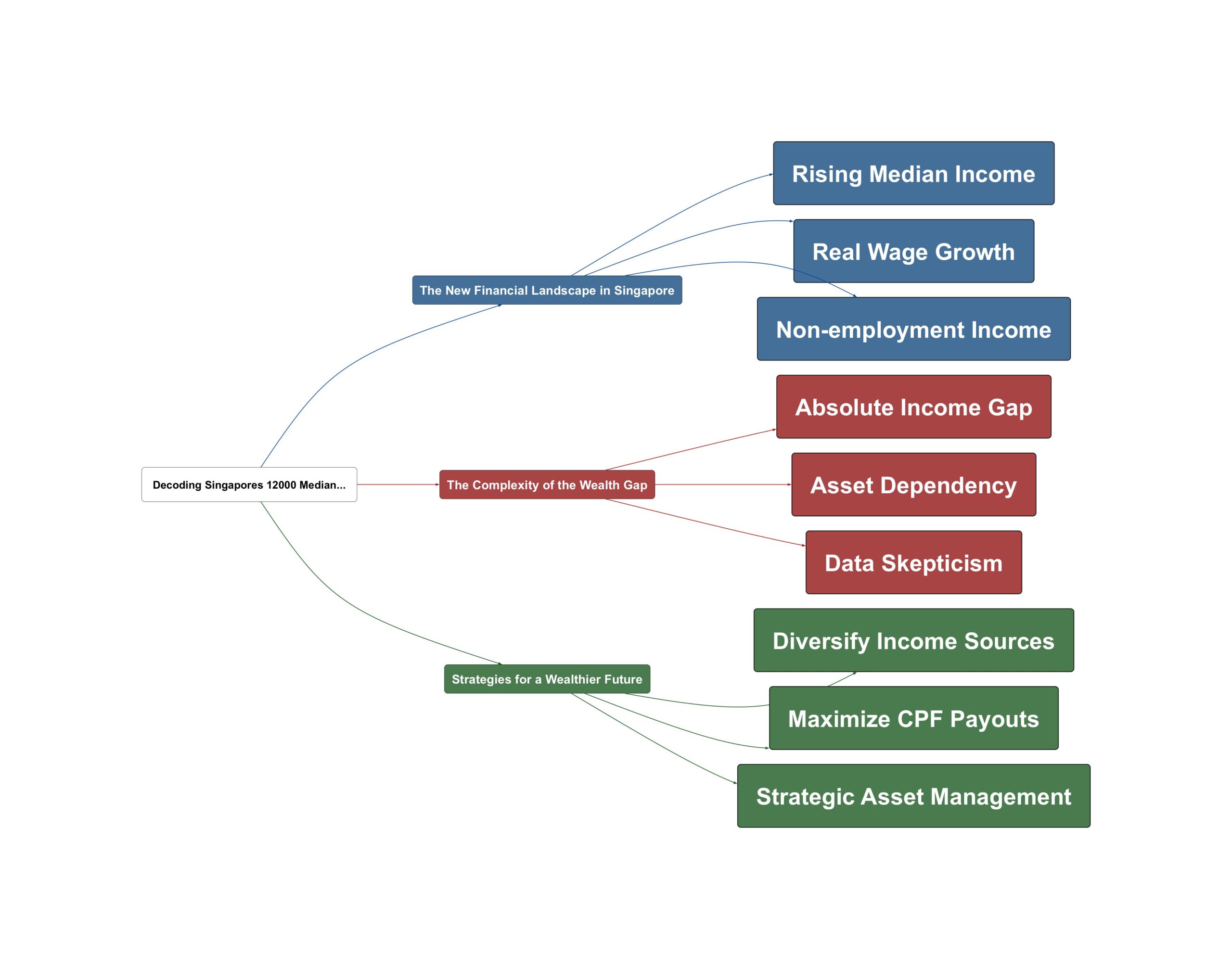
Singapore has reached a significant financial milestone, with the latest data showing that median household incomes have officially breached the five-figure mark. While many might view this as just another statistic, the underlying shifts in how Singaporeans earn and grow their wealth tell a much deeper story about the nation’s economic evolution. Is this growth truly felt on the ground, or is there more to the numbers than meets the eye?
The New Financial Landscape in Singapore
For the first time in history, Singapore’s median monthly household income has crossed a major threshold. According to the latest reports, the figure rose from $11,558 in 2024 to $12,446 in 2025. This represents a significant 7.7% nominal increase, which remains a healthy 6.8% even after accounting for inflation. This real growth suggests that the average household is seeing genuine improvements in purchasing power, rather than just keeping pace with rising costs.
Interestingly, the source of this wealth is shifting. We are seeing a move away from pure reliance on a monthly paycheck. As Kelvin Learns Investing notes, non-employment income—which includes CPF interest, investment dividends, and rental income—now accounts for over 20% of total household income, up from just 15% a decade ago. Here’s how the current situation looks:
- Median income has reached a record high of $12,446.
- Real income growth is outpacing inflation at 6.8%.
- Income sources are diversifying beyond traditional employment.
For the first time ever, median money household income crossed $12,000 in 2025, growing by about 7% year on year.
— Kelvin Learns Investing
The Complexity of the Wealth Gap
Despite these record-breaking numbers, a sense of skepticism often lingers. Why does it feel like some are still struggling while the median rises? The complication lies in the difference between percentage growth and absolute dollar value. While the lowest 10% of households saw a staggering 12.8% growth in income per member, the top 10% only grew by 3%. On the surface, this looks like the gap is closing, but the reality is more nuanced. Because the top tier starts from a much higher base, their absolute dollar increase still outweighs the gains made by those at the bottom. The rich are still getting richer in total dollar terms, even if the lower-income groups are growing faster proportionally.
Furthermore, the data reveals a surprising trend among low-income statistics. Many households in the lowest decile aren’t necessarily ‘poor’ in the traditional sense; nearly half are actually retirees who may be asset-rich but income-poor. As Kelvin Learns Investing explains, some of these individuals own private property or cars despite having little to no ’employment income.’ This creates a complex picture where income data alone doesn’t tell the full story of a household’s financial health.
When you look at the numbers in dollars, the higher income households are still seeing larger absolute increases simply because they started from a much larger base.
— Kelvin Learns Investing
Strategies for a Wealthier Future
So, how should we navigate this new era of asset-dependent wealth? The resolution lies in understanding the changing definition of ‘income’ and leveraging the systems available. The government’s shift toward measuring ‘household market income’ highlights that wealth generation is becoming increasingly tied to assets rather than just labor. For the average Singaporean, this means that maximizing CPF payouts and investment portfolios is no longer optional—it is a core component of financial stability.
Additionally, understanding the role of government transfers can provide a clearer picture of net wealth. The lowest-income households often receive significant support that offsets their tax contributions, effectively boosting their usable resources. To stay ahead, one must focus on building a diversified income stream that mirrors the national trend toward non-employment earnings. Sound familiar? It is the classic path of moving from earned income to passive wealth.
This means Singaporeans are not just getting richer, but the wealth generation is also becoming more asset dependent.
— Kelvin Learns Investing
💡 Key Takeaway: Diversify income as non-work sources now drive 20% of Singaporean household wealth.
Video Sources
- 5 Shocking Facts About Singapore Household Income
- Singapore Household Income Just Hit $12,000 | But Here’s What Most People Miss