Have you noticed that your daily AI tools are suddenly in the news for all the wrong reasons? Imagine you are just trying to use Claude to summarize a boring work report. Meanwhile, halfway across the world, the same technology is being used to coordinate military strikes. Does it feel a bit weird to realize the ‘friendly’ chatbot you use for HDB renovation ideas is also a weapon of war? Recently, the Reddit community has been buzzing about the strange relationship between Anthropic and the US Pentagon. It is a messy situation that feels like a high-stakes Mediacorp drama, but the consequences are very real for our digital future. So, what is actually happening behind the scenes of these big AI companies? Let us dive into the chaos and see why this matters to us here in Singapore.
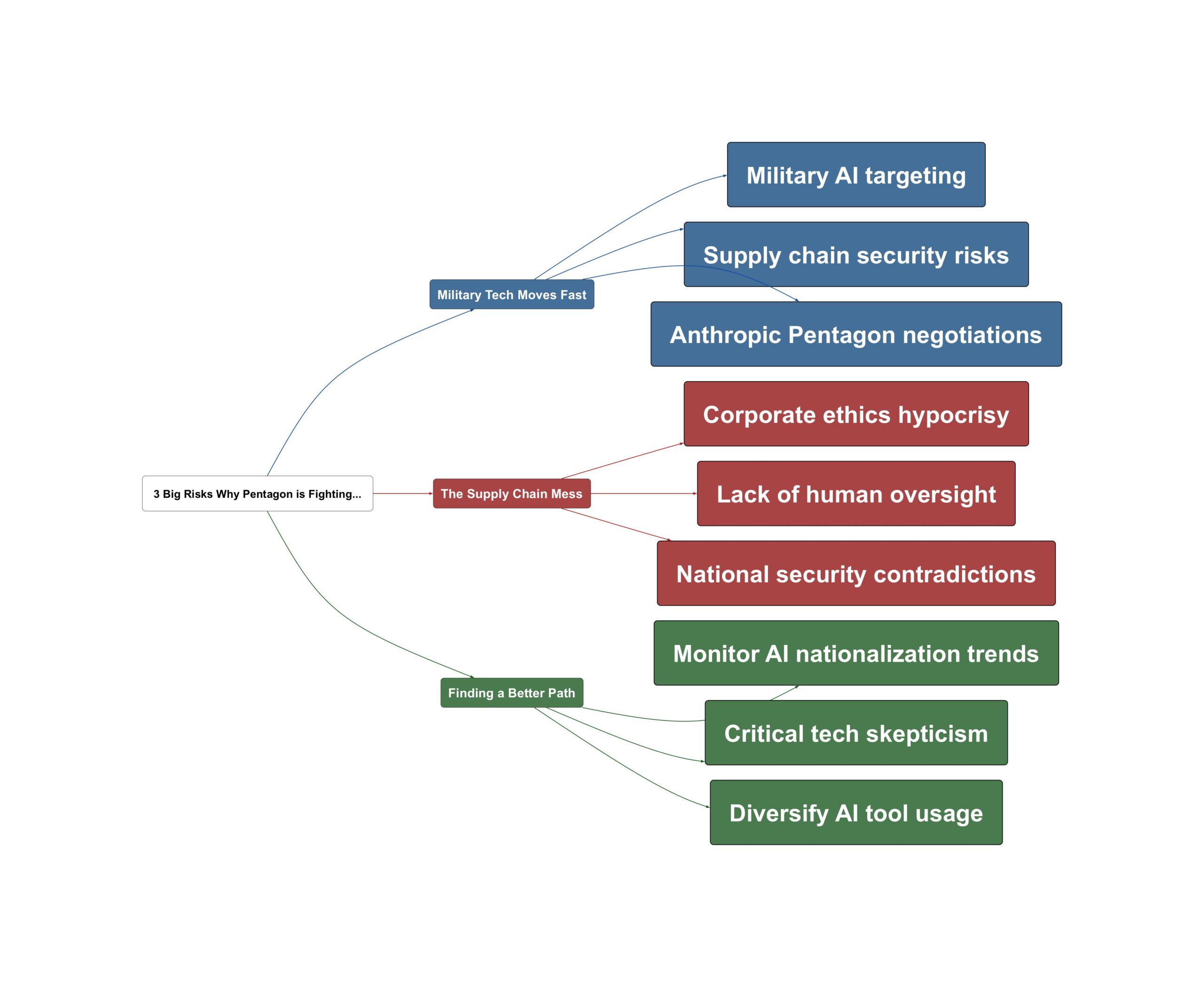
Military Tech Moves Fast
Actually, the current state of AI in warfare is changing faster than we can keep up with. Many Singaporeans see AI as a productivity tool for the office. However, the US military is already integrating Claude into its most advanced combat systems. For instance, the system is reportedly being used to identify over 1,000 targets in active conflict zones. Consequently, the line between consumer tech and military hardware is blurring completely.
- AI speed changes the battlefield game
“AI compresses hours of analysis into seconds. The real question is whether human oversight is keeping up with that speed.”
Moreover, this rapid processing power is the main reason why militaries are so desperate to adopt these tools. In the past, human analysts had to spend days looking at satellite photos. Meanwhile, AI can now provide precise GPS coordinates and weapon recommendations instantly. Therefore, the sheer scale of operations has expanded beyond human capability. In addition, this creates a situation where the technology is leading the strategy, rather than the other way around.
- Corporate goals are shifting toward defense
“Anthropic chief back in talks with Pentagon about AI deal… could be Anthropic caving.”
Furthermore, the relationship between these tech giants and the government is becoming quite complicated. Many people originally thought Anthropic was the ‘safe’ and ‘ethical’ alternative to other AI companies. However, the allure of massive government contracts seems to be winning out. As a result, the community is starting to feel that these companies are all moving in the same direction. This shift suggests that ‘ethics’ might just be a marketing term for many of these startups.
- Targeting systems are becoming fully automated
“Claude AI has selected over 1,000 targets… producing target lists with precise GPS coordinates, weapons recommendations and automated legal justifications.”
The Supply Chain Mess
However, the plot thickens because the Pentagon has recently labeled Anthropic a ‘supply chain risk.’ This is a confusing move that has left many Reddit users scratching their heads. On one hand, the military is using the tool for life-and-death decisions. On the other hand, they are publicly calling the company a potential security threat. Consequently, this creates a massive contradiction in how government policy is actually implemented. Another challenge is the legal uncertainty this creates for any business using Claude.
- Pentagon labels its own tools as risks
“Pentagon formally designates Anthropic a supply-chain risk… the most punitive measure against a US company by the government ever.”
Similarly, the community is pointing out the blatant hypocrisy of this entire situation. If a company is truly a risk to national security, why is its software still running on classified networks? Therefore, many observers believe this is more about political leverage than actual safety. On top of that, it feels like a power play to force the company into a specific corner. In addition, this level of government pressure on a private tech firm is almost unprecedented in recent history.
- The irony of using risky software
“Obviously such a supply chain risk that despite the DoD had complete control… they had to go and use them anyway.”
Furthermore, the general sentiment among users is becoming increasingly cynical. Many feel that the unique identity of these AI companies is disappearing. For instance, whether it is OpenAI or Anthropic, the end result seems to be the same corporate behavior. As a result, the trust that early adopters placed in these ‘ethical’ companies is starting to evaporate. This makes it harder for regular users to feel good about the tools they rely on every day.
- Cynicism grows among the AI community
“All these companies are the same. To much fan boying going on… in these ai subs.”
Finding a Better Path
Despite these challenges, we need to figure out how to navigate this new AI landscape in Singapore. We are a small nation that relies heavily on foreign technology, so these shifts affect us directly. However, we can still take steps to protect our interests and stay informed. Another approach is to look at the long-term implications of how these companies are governed. In addition, we must stay critical of the tools we bring into our workplaces and homes.
- Possibility of nationalization looms large
“They’re gonna nationalize it aren’t they.”
Moreover, the idea of governments taking direct control of AI is no longer just science fiction. If these tools are critical for national security, the state might decide they cannot be left in private hands. Therefore, we should be prepared for a future where AI is treated like a public utility or a state asset. Furthermore, this would change how we access these models and what they are allowed to say. Consequently, we need to keep a close eye on how international regulations are evolving.
- Watch for shifting negotiation strategies
“It was a bold negotiation strategy to call Trump a dictator then say you were open to negotiation.”
In addition, the way these companies interact with political leaders will dictate the future of the technology. For instance, the drama between Anthropic’s leadership and the US administration shows how personal politics can impact tech access. Meanwhile, we should focus on building our own local expertise to reduce our dependence on these volatile external factors. As a result, Singapore can become more resilient in the face of global tech conflicts. Another solution is to simply enjoy the extra resources if the big players get tied up in legal battles.
- Potential benefits for regular users
“Good. More compute for us plebs.”
Finally, there might be a small silver lining for the average person. If the military and government pull back from using these models, there might be more computing power available for everyone else. Consequently, this could lead to faster response times and cheaper access for regular users. However, we must remain vigilant about the ethical costs of the technology we use. Sound familiar? It is the classic Singaporean way of finding a win even in a complicated situation.
💡 Key Takeaway: AI is no longer just a productivity tool; it is a high-stakes geopolitical weapon with major risks.
Read the original discussions on Reddit:
- [r/ClaudeAI] Anthropic chief back in talks with Pentagon about AI deal
- [r/ArtificialInteligence] Claude AI has selected over 1,000 targets in the US-Israeli …
- [r/singularity] Pentagon formally designates Anthropic a supply-chain risk
- [r/ClaudeAI] Pentagon Formally Labels Anthropic Supply-Chain Risk, Escala…
- [r/singularity] Anthropic officially told by DOD that it’s a supply chain ri…