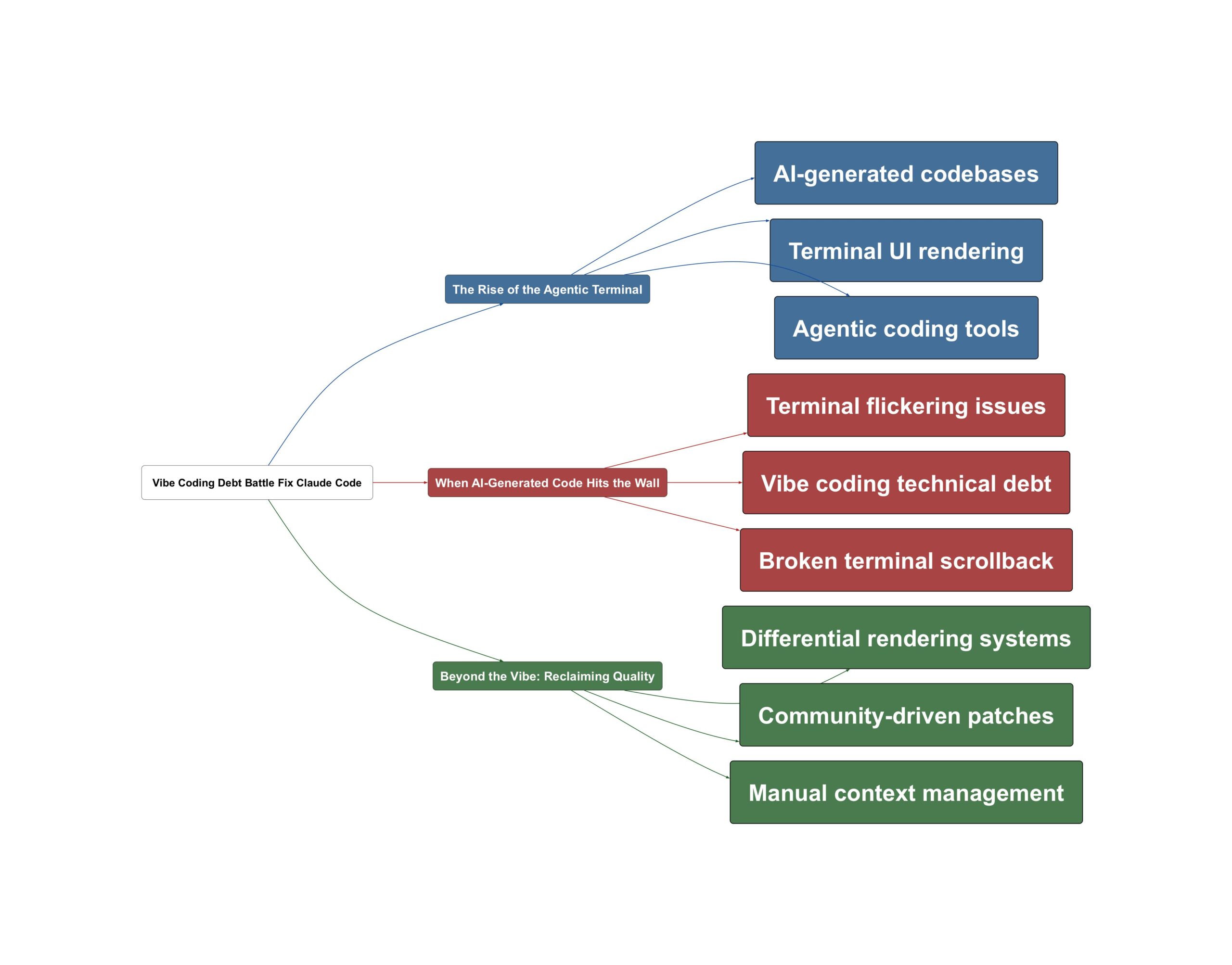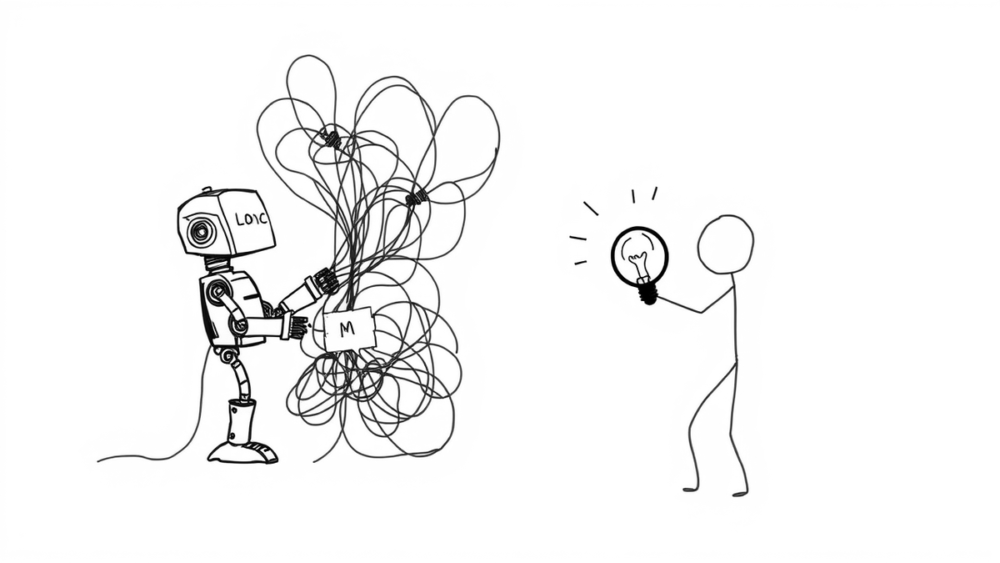
Claude Code promised to revolutionize the developer workflow, but as the dust settles, users are finding that "vibe coding" at scale comes with a significant interest rate. The promise of an AI that writes its own codebase is meeting the cold reality of terminal flickering, broken scrollback, and a mounting pile of technical debt that even its creators struggle to navigate.
The Rise of the Agentic Terminal
We are currently witnessing a massive shift toward agentic coding tools that live directly in the TUI (Terminal User Interface). Anthropic’s Claude Code has led the charge, aiming to handle complex refactors and repository-wide changes autonomously. However, maintaining a smooth experience in the terminal is notoriously difficult. Recently, Anthropic announced a major update to address one of the community’s loudest complaints: terminal flickering. As one Anthropic engineer noted,
We rewrote our rendering system from scratch and only ~1/3 of sessions see at least some flickering now.
This move toward a differential renderer aims to reduce visual artifacts by 85%, acknowledging that the tool’s rapid growth outpaced its UI stability. Here is the thing: is a faster UI enough to mask deeper architectural issues?
When AI-Generated Code Hits the Wall
The honeymoon phase is over, and the Hacker News community is starting to point out the cracks in the "vibe coding" philosophy. There is a growing suspicion that a codebase written primarily by LLMs becomes an unmanageable beast over time. How do you debug precise edge cases in a million-line codebase that no human fully designed? As one commenter lamented,
I feel like Claude Code is starting to fall over from being entirely written by LLMs. How do you even begin to fix precise bugs in a 1M+ LOC codebase all written by AI?
Beyond the architectural concerns, practical bugs are mounting. Users report that the tool breaks Ghostty’s native scrollback, struggles on Windows, and fails to trigger auto-compact features despite being marked as "fixed." It raises a cynical but necessary question: Is the speed of AI development worth the cost of a bloated mess that struggles with basic terminal conventions?
Beyond the Vibe: Reclaiming Quality
The path forward requires a mix of official fixes and community ingenuity. While Anthropic works on its internal renderer, third-party solutions like "Claude Chill" have emerged to bridge the gap. For power users, the solution often involves taking back control of the context.
If I see my context ticking down, I ask it to give me a summary and TODO list, and either copy it, or have it put that into a docstring,
one user shared, highlighting a manual strategy to prevent the model from "falling over." Ultimately, the industry may need to pivot from competing on sheer feature speed to competing on fundamental quality. Whether through "OpenCode" initiatives or more rigorous human oversight, the "vibe coding" era needs a dose of traditional engineering discipline to survive its own success.
- Claude Chill: Fix Claude Code’s flickering in terminal
- Auto-compact not triggering on Claude.ai despite being marked as fixed